from lat. digĭtus, “finger,” and gradior, “step, walk”
In zoology, a land animal that walks by placing its toes, rather than the entire sole of the foot.
Digitigrades include birds, many extinct dinosaurs, and many mammals such as felids and canids.
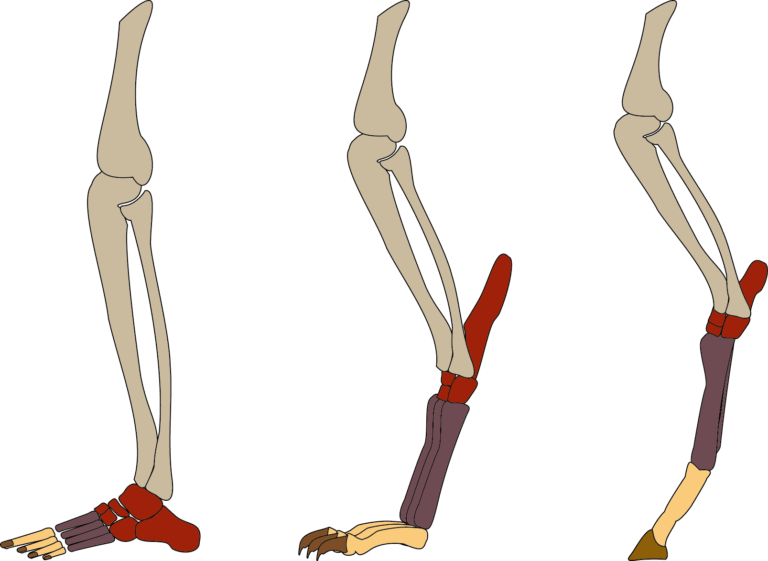
They differ from plantigrades, such as primates and bears, which rest the entire sole of their foot on the ground while moving, and from unguligrade such as horses and bovids, which walk on their hooves.
Comparison of the structures of the lower limbs. From left to right: plantigrade, digitigrade and unguligrade. The basipodis shown in red, the metapodsin purple, the phalangesin yellow and, at the end of each limb (in brown) are represented the keratinized claws.